An independent medical examination (IME) is an exam by a doctor you did not choose and who does not treat you. The Ohio Bureau of Workers’ Compensation (BWC), your employer, or the Industrial Commission of Ohio (IC) can require one if you are being treated for a workplace injury. The doctor reviews your records, examines you, and writes a report that can be used to decide whether your benefits or treatment continue.
At Plevin & Gallucci, we help injured workers prepare for these exams. We tell our clients that IMEs are not truly independent and should be treated as defense exams.
What is an IME in Ohio Workers’ Comp?
An IME is a one-time medical evaluation used to answer a question in your workers’ comp claim. The question might be whether you can return to work, whether you need more treatment, or how much permanent damage your injury caused.
Ohio does not use private workers’ comp insurance companies. Your claim is handled by BWC or, if you work for a large self-insured company, by your employer. That means the exam request will come from BWC, your employer, or the IC.
It’s important to remember that the examining doctor is not your physician of record. There is no doctor-patient relationship. The doctor will not treat you, and what you say is not confidential.
Why We Call Them Defense Exams
BWC describes an IME as an impartial evaluation by a qualified specialist. In practice, many of these exams are requested when BWC or an employer wants a medical opinion to support stopping benefits or denying treatment. The same doctors are often used again and again.
That does not mean every report will be unfavorable. It does mean you should go in prepared. The doctor is there to answer questions for the party that asked for the exam, not to help you heal or to help you succeed in your claim.
Who Can Send You to an Exam?
Three different parties can schedule an exam in an Ohio claim. The rules are a little different for each one.
Exams Scheduled by BWC
BWC schedules several types of exams. These are the ones injured workers see most often:
- Ninety-day exam: Ohio law requires this exam after you receive 90 consecutive days of temporary total disability (TTD) compensation. It looks at whether your compensation should continue, what is keeping you from returning to work, and whether rehabilitation could help.
- Extent of disability exam: BWC may schedule this at any time while TTD is being paid or requested. It also schedules one after 200 weeks of TTD.
- Permanent partial disability exam: If you file a C-92 application, a doctor estimates your percentage of permanent impairment.
- Additional allowance exam: BWC may request an exam when you ask to add a new condition to your claim.
Ohio law calls for the 90-day exam to be scheduled within 30 days after the 90-day period ends. The exam can be skipped if your employer or BWC waives it. Under BWC’s policy, it can also be skipped if your own doctor says you have reached maximum medical improvement (MMI).
Exams Requested by Your Employer
Under Ohio Revised Code Section 4123.651, your employer may require you to be examined by a medical provider of its choice. The employer does not need approval from BWC or the IC first. This applies whether your employer is self-insured or covered through the state fund.
There are limits. Ohio’s rules generally allow only one employer exam on any given issue while that issue is pending. A second exam on the same issue is allowed only in narrow situations, and a hearing administrator decides the matter if it is disputed.
Your employer has to pay for the exam, including your travel and meal expenses. If you are working and lose wages to attend, your employer must reimburse those wages after you submit proof. The exam is also not supposed to delay your benefits or cause you undue hardship.
Exams Scheduled by the Industrial Commission
The IC schedules its own exams, most often after a worker applies for permanent total disability. A hearing officer can also request one. A specialist chosen by the IC performs the exam at no cost to you.
What Happens Before the Exam?
You should receive written notice of the date, time, and place. BWC’s policy calls for at least 14 calendar days of notice, and the IC says it gives at least two weeks. BWC staff are also supposed to call you first to confirm your address and availability.
Here are a few things to take care of ahead of time:
- Read the notice closely: It should tell you who requested the exam and what type of exam it is.
- Plan your travel: BWC tries to use the location closest to your home. For IC exams, mileage is reimbursed if the round trip from your home is more than 45 miles.
- Ask for an interpreter early: Interpreter services and disability accommodations have to be requested before the exam date.
- Bring photo identification: BWC requires it at the exam.
- Tell your lawyer: If you have one, send a copy of the notice right away.
What to Expect During the Exam
Most exams follow the same pattern. The doctor reviews your medical records and test results, asks about your medical history and your injury, and then examines you. The doctor should only consider the allowed conditions in your claim.
Many exams are short. The doctor is not prescribing treatment, so the visit may feel rushed compared to an appointment with your own doctor. A psychological exam that includes testing can take more than an hour.
You should also know who can be in the room. For BWC exams, the policy allows a relative, a chaperone, or an interpreter to attend. It does not allow your lawyer, your employer, or anyone from the managed care organization, and it prohibits audio and video recording.
Tips for the Day of Your Exam
You cannot control what the doctor writes. You can control how you prepare and how you present yourself:
- Be on time: If you arrive late, the doctor may not be able to see you.
- Be honest: Do not exaggerate your symptoms, and do not downplay them either. Either one can hurt your credibility.
- Be consistent: Describe your injury and your limits the same way you have described them to your own doctor.
- Be specific: Explain what you can and cannot do on a typical day, including bad days. “I can stand for about ten minutes before the pain starts” is more useful than “my back hurts.”
- Stay on topic: Answer the question that is asked. You do not need to volunteer opinions about your employer or your claim.
- Expect to be observed: The doctor may note how you walk, sit, and get on and off the exam table.
- Give full effort on tests: If a test causes pain, say so and explain where it hurts.
After the exam, write down what happened while it is fresh. Note what time the exam started and ended, what the doctor asked, and which tests were done. Those notes can help later if the report leaves something out or gets a fact wrong.
What Happens If You Miss or Refuse an Exam?
Skipping an exam can seriously hurt your claim. Under Ohio law, if you refuse an exam ordered by BWC or the IC, or get in the way of it, your right to have your claim considered or to receive compensation can be suspended during the refusal. The same is true if you refuse an employer exam without good cause.
BWC’s policy gives examples of good cause for missing an exam. They include these situations:
- A death in your immediate family;
- A hospital stay or medical emergency;
- A car accident;
- A weather emergency;
- Notice that was not proper or went to the wrong address.
If you have good cause, benefits continue, and the exam is rescheduled. If you do not, BWC may suspend your TTD until you attend. For IC exams, you must call ahead of time, using the number on your notice, to ask for a new date.
A suspension is usually lifted once you attend a rescheduled exam. Still, a gap in your checks can be hard on your household. If you have a real conflict, call as early as you can and keep a record of who you spoke with.
What Happens After the Exam?
The doctor writes a report that answers the questions asked by the party that requested the exam. For BWC exams, the report is sent to your physician of record, and any party to the claim can request a copy. For employer exams, the employer must send the report to the IC and to your representative.
A report can be used in several ways:
- To argue that TTD should stop: A doctor may say you have reached MMI or can return to your former job.
- To deny treatment: A doctor may say a surgery, therapy, or medication is not needed or not related to your injury.
- To oppose a new condition: A doctor may say a condition was not caused by your work injury.
- To set a permanent partial disability award: The percentage in the report affects how much you are paid.
One report does not always end your benefits on its own. If your physician of record disagrees with the exam doctor, the dispute generally goes to a hearing at the IC. A hearing officer then weighs both opinions.
How to Respond to an Unfavorable Report
A bad report is not the last word. You have the right to submit your own medical evidence, and a detailed report from your physician of record often matters most. Your doctor can explain why the exam doctor’s findings are wrong or incomplete.
You can also point out problems with the report itself. Common examples include a doctor who did not review all of your records, considered the wrong conditions, or spent only a few minutes with you. Your notes from exam day can help show this.
Pay close attention to deadlines. If BWC or a hearing officer issues an order based on the report, you generally have only 14 days from the date you receive it to appeal. Missing that deadline can make the decision final.
What Columbus and Cleveland Workers Should Know
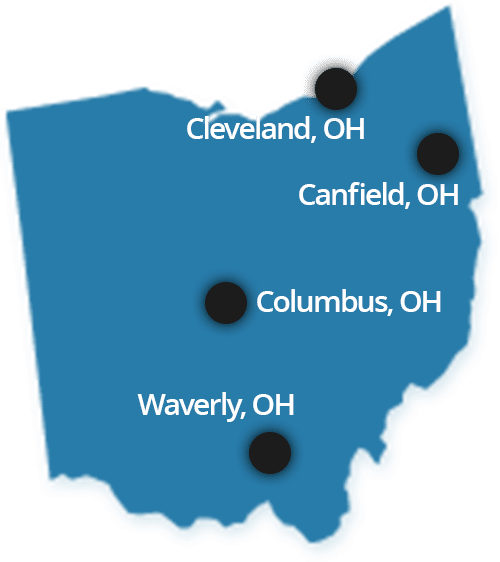
The rules are the same across Ohio, but the logistics are local. Exams are usually scheduled with doctors near your home, so workers in Franklin County and Cuyahoga County are often sent to offices in or around Columbus and Cleveland. If the location on your notice is far from where you live, ask about travel reimbursement before you go.
We have offices in both cities, and our workers’ compensation attorneys represent injured workers at these hearings.
How Our Workers’ Compensation Attorneys Can Help Before and After an Exam
You are not required to have a lawyer for an exam. Even so, we can make the process less stressful and help protect your claim. We cannot go into the exam room with you, but a lot of our work as your advocate happens outside of it.
Before the exam, we can check whether the exam is allowed under the rules and tell you what the doctor is being asked to decide. We can also make sure your own medical records are current. After the exam, we can get the report, work with your physician of record on a response, and argue your side at a hearing.
We also look at timing. An exam notice is often a sign that BWC or your employer plans to challenge your benefits soon. Getting advice from a knowledgeable attorney when the notice arrives gives you more time to prepare than waiting for a denial.
Bring Your Exam Notice to Plevin & Gallucci
If you received a notice for a medical exam, or a report was just used against you, we can help you decide what to do next. Call us at (216) 861-0804 or schedule a free consultation with our team. We will review the notice, explain your options, and answer your questions.