Key Takeaways
- A VSSR claim may provide compensation beyond Ohio workers’ compensation benefits if your employer violated an applicable workplace safety regulation.
- To recover a VSSR award, you must prove that an Ohio workplace safety regulation applied to your job, your employer violated that regulation, and the violation proximately caused your injury.
- Common VSSR claims involve missing machine guards, lockout and tagout failures, inadequate fall protection, electrical hazards, unsafe material handling equipment, and personal protective equipment violations.
- A VSSR award is separate from your workers’ compensation benefits and may equal 15% to 50% of the maximum weekly compensation rate, depending on the Ohio Industrial Commission’s findings.
- You generally have one year to file a VSSR application for claims arising on or after September 15, 2020.
- An experienced Ohio workers’ compensation attorney can identify applicable safety regulations, gather supporting evidence, prepare your VSSR application, and represent you before the Ohio Industrial Commission.
When you’re injured at work because your employer didn’t follow an Ohio workplace safety rule, your workers’ compensation claim may not be the only source of benefits. Ohio law allows injured workers to pursue a Violation of a Specific Safety Requirement (VSSR) claim when an employer’s failure to comply with a qualifying safety requirement causes a workplace injury or occupational disease.
At Plevin & Gallucci, we’ve represented injured Ohio workers for decades and have handled many VSSR claims for clients. This guide explains what a VSSR claim is, who may qualify, what must be proven for your claim to be successful.
What is a Violation of a Specific Safety Requirement (VSSR)?
A violation of a specific safety requirement (VSSR) is a special financial penalty issued when an employer breaks an established state safety rule, leading to a worker’s injury, illness, or death. To recover a VSSR award, you must prove that your Ohio employer violated an applicable rule and that the violation caused your injury.
Note: The Ohio Industrial Commission has exclusive authority to decide these claims under Article II, Section 35 of the Ohio Constitution and the laws governing Ohio’s workers’ compensation system.
The workplace safety rules that support a VSSR claim are found in the Ohio Administrative Code and other qualifying state safety regulations. These rules establish employer duties involving the following:
- Machine guards
- Lockout procedures
- Fall protection
- Electrical equipment
- Ventilation systems
- Material handling equipment
- Other workplace hazards
A claim can’t rely on a general allegation that an employer failed to maintain a safe workplace. Instead, it must identify the safety rule in question, explain how the employer failed to comply with it, and establish that the violation caused the injury.
How is a VSSR Claim Different from a Standard Workers’ Compensation Claim?
Ohio’s workers’ compensation system provides medical care and wage replacement to employees who suffer work-related injuries or occupational diseases. In most cases, you don’t have to prove that your employer caused the injury or illness to receive these benefits. If your claim is allowed, you may qualify for:
- Payment of medical treatment;
- Temporary total disability compensation;
- Permanent disability compensation;
- Vocational rehabilitation services;
- Death benefits for eligible surviving family members.
A VSSR claim addresses a separate legal issue. Instead of determining your eligibility for workers’ compensation, the Ohio Industrial Commission decides if your employer violated a safety rule. To receive a VSSR award, you must:
- Identify the applicable safety rule;
- Prove that your employer failed to comply with it, and;
- Establish that the violation caused your injury.
If the Commission rules in your favor, it may award additional compensation, calculated as a percentage of the amount payable under your workers’ comp claim, subject to statutory limits.
Who Can File a VSSR Claim in Ohio?
You may file a VSSR application if:
- You’ve sustained a work-related injury or occupational disease and;
- You believe your employer caused the condition by violating an Ohio workplace safety rule.
A VSSR application isn’t a standalone case. Instead, it must be tied to an allowed workers’ compensation claim arising from the same injury or occupational disease. VSSR applications also aren’t limited to one type of job or industry: Most occupations may qualify if an Ohio workplace safety rule applied to the work being performed and the employer failed to comply with that requirement.
A surviving spouse or other eligible dependent may pursue a VSSR award after a fatal workplace injury if:
- The injured worker’s death resulted from an allowed workers’ compensation claim and;
- An employer’s violation of an applicable Ohio workplace safety rule caused the fatal injury.
What Must be Proven to Win a VSSR Claim?
A VSSR application must identify the Ohio workplace safety rule that applied when the injury occurred. Many qualifying regulations are found in the Ohio Administrative Code and address hazards involving machine guards, power presses, conveyors, industrial trucks, cranes, electrical equipment, lockout procedures, ventilation systems, and fall protection.
The Employer Failed to Comply with the Regulation
After identifying the applicable regulation, you must demonstrate that your employer didn’t satisfy its requirements. Depending on the situation, evidence may include:
- Photographs;
- Maintenance records;
- Inspection reports;
- Incident investigations;
- Witness testimony;
- Employer safety records.
This documentation may show that required guards were missing, safety devices had been removed, equipment wasn’t maintained as required, or mandatory procedures weren’t followed.
The Violation Proximately Caused the Injury
Establishing noncompliance alone doesn’t support a VSSR award. You must also prove that the employer’s failure to follow the applicable regulation proximately caused your injury or occupational disease. If the evidence shows the injury would have occurred even if the employer had complied with the regulation, the application may be denied.
Common Workplace Safety Violations that May Lead to VSSR Claims
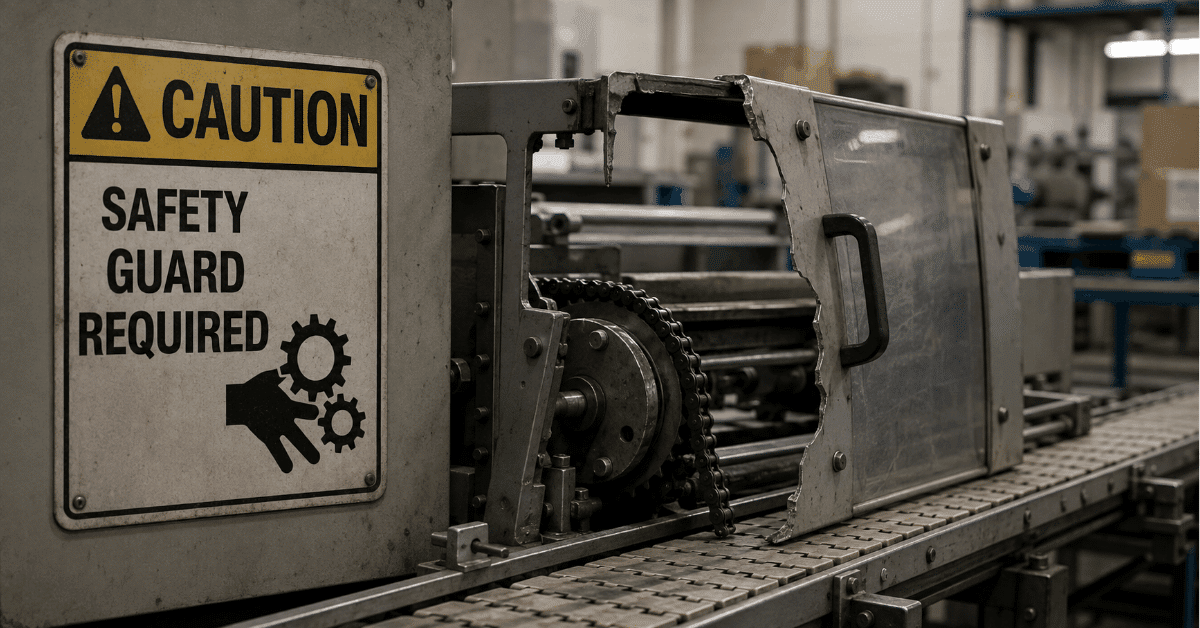
- Machine Guard Violations: Ohio workplace safety regulations require protective guards on many types of industrial machinery to prevent contact with moving parts. Punch presses, conveyors, grinders, saws, and power transmission equipment are common examples. If a required guard was removed, damaged, bypassed, or never installed, an employee can suffer amputations, crush injuries, lacerations, or other serious injury.
- Lockout and Tagout Violations: Before machinery is cleaned, serviced, repaired, or maintained, hazardous energy sources must be isolated to prevent unexpected startup. Failure to disconnect electrical, hydraulic, pneumatic, or mechanical energy can place employees in danger while work is underway. A VSSR claim may arise when required lockout procedures weren’t followed before maintenance began or machinery was reenergized before employees completed their work.
- Fall Protection Violations: Employees working on roofs, scaffolding, platforms, elevated walkways, and similar locations may be protected by guardrails, personal fall arrest systems, lifelines, or safety nets. Missing, damaged, or improperly installed protective systems increase the risk of serious injuries from elevated work areas. An employer’s failure to provide or maintain these safeguards can support a VSSR application if the violation caused the accident.
- Electrical Safety Violations: Work involving energized panels, switchgear, transformers, wiring systems, and other electrical components is governed by Ohio workplace safety regulations. Failure to disconnect power, maintain electrical equipment, install required protective devices, or guard energized components can expose employees to electrocution, burns, arc flash injuries, and other serious conditions.
- Material Handling Violations: Forklifts, overhead cranes, hoists, conveyors, and similar machinery are subject to safety regulations governing operation, maintenance, inspections, and load handling. Missing safety devices, mechanical failures, overloaded equipment, or unsafe operating practices can lead to struck-by incidents, crushing accidents, and fatal injuries.
- Personal Protective Equipment Violations: Ohio workplace safety regulations require employers to provide personal protective equipment when necessary. Depending on the job duties, this may include hard hats, safety glasses, face shields, hearing protection, gloves, respirators, or protective footwear. A VSSR claim may arise if required protective gear wasn’t provided, maintained in safe condition, or required for applicable worksites.
Examples of Workplace Accidents that May Involve VSSR Claims
- Machine Entanglement Accidents: Employees working near conveyors, rollers, rotating shafts, gears, belts, and similar equipment can become caught in moving machinery when required guards are missing or defective. These accidents can result in amputations, fractures, crush injuries, or permanent disabilities.
- Crush Injuries: Crush injuries may occur when employees are pinned between heavy objects, struck by industrial equipment, or trapped beneath moving machinery. Forklifts, overhead cranes, hydraulic presses, compactors, and other industrial equipment can create serious hazards if safety devices are missing or operating procedures aren’t followed.
- Falls From Elevated Work Areas: Falls remain one of the leading causes of serious workplace injuries. Employees working on scaffolding, roofs, ladders, platforms, mezzanines, and elevated walkways rely on guardrails, fall arrest systems, and other protective measures required by Ohio regulations.
- Forklift Accidents: Forklift accidents can happen during loading operations, warehouse activities, manufacturing operations, and construction projects. Employees may be struck by a powered industrial truck, pinned between a forklift and another object, or injured when unstable loads fall during transport.
- Electrical Accidents: Electrical injuries can result from contact with energized equipment, exposed wiring, arc flashes, or improperly maintained electrical systems. Burns, electrocution, cardiac injuries, and permanent impairments may occur when electrical safety regulations aren’t followed.
- Chemical Exposure Incidents: Employees in manufacturing, food processing, laboratories, maintenance operations, and industrial facilities may work with hazardous chemicals that require protective equipment, ventilation systems, or safe handling procedures. Failure to comply with applicable workplace safety regulations can expose employees to burns, respiratory injuries, eye injuries, or toxic substances.
- Confined Space Accidents: Confined spaces can expose employees to oxygen-deficient atmospheres, toxic gases, engulfment hazards, or other dangerous conditions. Tanks, vaults, pits, silos, and utility structures frequently require employers to follow workplace safety regulations governing entry procedures, atmospheric testing, ventilation, and rescue planning.
- Explosion and Fire Accidents: Industrial explosions and workplace fires can occur when combustible materials, flammable liquids, gases, dust, or ignition sources aren’t properly controlled. Employees may suffer severe burns, blast injuries, smoke inhalation, or fatal injuries during these events.
What Compensation is Available Through a Successful VSSR Claim?
Under Article II, Section 35 of the Ohio Constitution and Ohio Revised Code Section 4121.47, a VSSR award ranges from 15% to 50% of the maximum weekly rate paid on the underlying workers’ compensation claim. As we mentioned earlier, this award is separate from the medical and wage replacement benefits.
Receiving a VSSR award doesn’t reduce the benefits already payable through your workers’ compensation claim. If your claim includes medical treatment, temporary total disability, permanent partial disability, permanent total disability, wage loss, or death benefits, those benefits continue. The VSSR award is added to those benefits instead of replacing them.
Unlike standard workers’ compensation benefits, a VSSR award is assessed directly against the employer. Ohio law treats the award as an extra penalty for violating an applicable workplace safety regulation, making it financially distinct from workers’ compensation coverage. As a result, a successful VSSR claim can substantially increase the total compensation available after a qualifying workplace injury.
FAQs About Violations of Specific Safety Requirements (VSSR) Claims in Ohio
Can I Receive Workers’ Compensation Benefits and a VSSR Award?
Yes. A VSSR award doesn’t replace the benefits available through the Ohio Bureau of Workers’ Compensation. Instead, it provides further compensation. Because the VSSR application is connected to an allowed workers’ comp claim, both proceedings arise from the same workplace injury. Your workers’ compensation case continues through the normal claims system while the Industrial Commission separately decides the request for a VSSR award.
Does Every Workplace Safety Violation Qualify for a VSSR Award?
No. A workplace accident, unsafe condition, or OSHA citation doesn’t automatically entitle an injured worker to a VSSR award. The claimant must prove that an Ohio workplace safety regulation governed the work being performed, that the employer failed to comply with that regulation, and that the violation proximately caused the injury or occupational disease.
How Long Do I Have to File a VSSR Application in Ohio?
For VSSR claims arising on or after September 15, 2020, you generally have one year from the date of the workplace injury, death, or diagnosis of an occupational disease to file an application with the Ohio Industrial Commission. Missing this statutory deadline may prevent the Commission from considering your request.
Call Plevin & Gallucci for Help with Your Ohio VSSR Claim
A workplace injury may entitle you to compensation beyond your workers’ compensation benefits. At the same time, the process can be complicated: To pursue a VSSR claim, you need to identify the applicable safety regulation, gather supporting evidence, and push back against disputes or denials. That’s why you want to speak with a lawyer as soon as possible when an injury occurs.
At Plevin & Gallucci, we have in-depth knowledge of how VSSR claims are evaluated by the Ohio Industrial Commission and extensive experience helping injured workers successfully pursue VSSR compensation. If you believe your employer violated an Ohio workplace safety regulation that contributed to your injury, our attorneys are ready to review your case. To schedule an initial consultation with an Ohio workers’ compensation lawyer, call our law firm at 855-4PLEVIN, fill out our contact form, or click in the bottom right-hand corner of the page to chat with an agent now.