Key Takeaways:
- Sprains and strains are common workplace injuries in Ohio, and workers’ compensation may cover medical treatment, lost wages, and rehabilitation when the injury is job related.
- These soft tissue injuries often result from overexertion, repetitive motion, slip and fall accidents, or sudden trauma in physically demanding industries like construction, healthcare, manufacturing, and warehousing.
- Unlike fractures, sprains and strains may not appear on X-rays, so claims often rely on physical exams, MRIs, symptom reports, and medical documentation.
- Ohio workers’ compensation is a no-fault system, meaning injured employees do not need to prove employer negligence to qualify for benefits.
- Employers and insurers frequently dispute sprain and strain claims by arguing the injury is exaggerated, pre-existing, unrelated to work, or less severe than reported.
- Reporting the injury quickly, seeking prompt medical care, following treatment plans, and keeping detailed records can strengthen a workers’ compensation claim and help protect access to benefits.
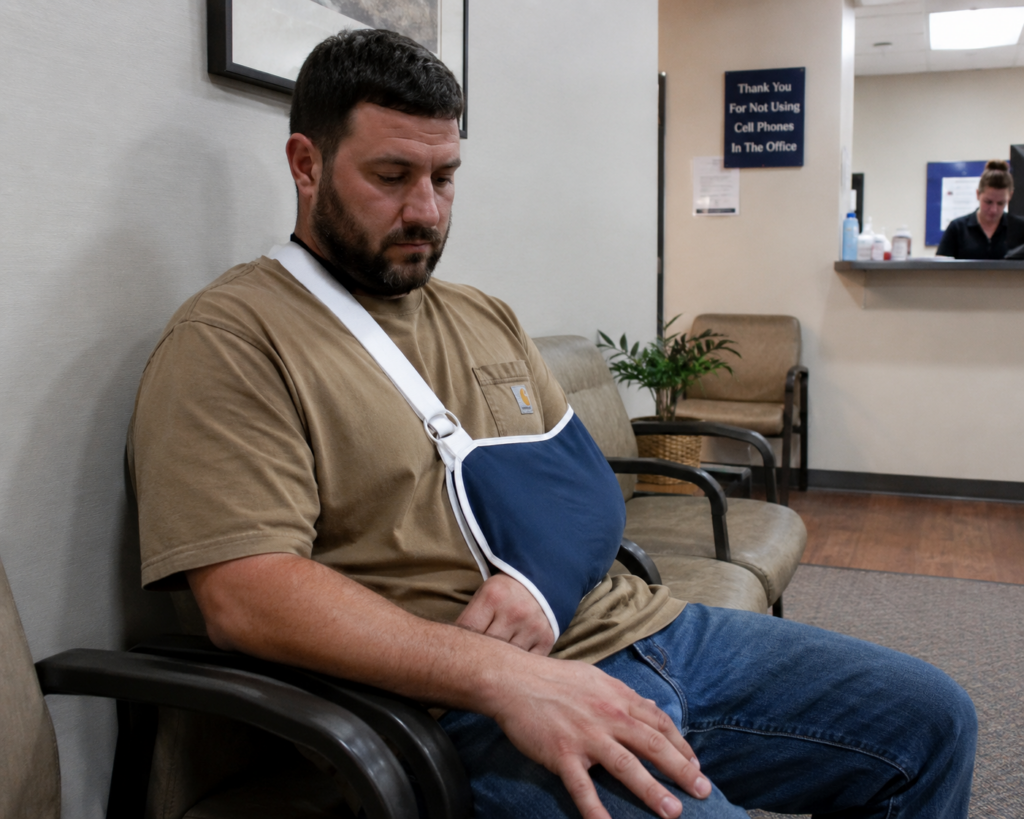
Sprains and strains account for a large share of workers’ compensation claims in Ohio each year. These work injuries affect construction workers, assembly workers, nurses, and many others whose jobs involve lifting, repetitive motion, or physical labor. While some employees recover within weeks, others may need ongoing medical care and physical therapy as well as extended time away from work and work restrictions upon return.
Fortunately, you may qualify for workers’ compensation benefits after a job-related sprain or strain. At the same time, those claims are closely scrutinized: Unlike fractures that appear immediately on X-rays, soft tissue injuries may require a thorough physical examination and targeted imaging tests like MRIs or ultrasounds. Employers and claim administrators may dispute the source of the injury, argue that a pre-existing condition caused the symptoms, or claim the employee can return to work sooner than recommended.
When you suffer a sprain or strain on the job, you’ll want to make sure you report it quickly, get prompt medical treatment, and follow your doctor’s recommendations. In this article, we’ll explain how you can file for workers’ comp benefits after an injury, the benefits you may receive, and why you should speak to a workers’ compensation attorney as soon as possible.
What Are Sprains and Strains?
Sprains and strains are soft tissue injuries that affect your muscles, tendons, ligaments, and joints. A sprain occurs when ligaments stretch or tear while a strain involves damage to muscles or tendons. These workplace injuries frequently affect the lower back, shoulders, neck, knees, wrists, and ankles. Common symptoms include:
- Pain and swelling;
- Stiffness;
- Muscle spasms;
- Bruising;
- Muscle weakness;
- Joint instability;
- Limited movement.
You may suffer a sprain after falling at work, twisting while carrying equipment, or slipping on a wet surface. Muscle strains, on the other hand, usually develop after lifting, pulling, climbing, or repetitive motion throughout your shift. Some workplace injuries result from a single accident while others develop after repeated stress on the body over time.
Unlike broken bones, soft tissue injuries may not appear on X-rays. Physicians may instead rely on physical examinations, MRI results, mobility limitations, and reported symptoms when diagnosing the condition and determining work restrictions.
Common Causes of Workplace Sprains and Strains in Ohio
- Overexertion: Overexertion is one of the leading causes of sprain and strain injuries in Ohio workers’ compensation claims. Heavy lifting, pulling or pushing equipment, and carrying materials all put tremendous stress on muscles, tendons, and ligaments. If your job requires you to regularly move heavy loads, your risk of overexertion injuries is higher.
- Slip and Fall Accidents: Slips, trips, and falls are another frequent cause of workplace sprains and strains. Wet floors, uneven surfaces, and poor lighting can all send a worker to the ground in a split second, resulting in a sprained ankle, wrist, or knee. These accidents happen across nearly every industry and work environment in Ohio.
- Repetitive Stress Injuries: Repetitive stress injuries develop when the same motion is performed repeatedly over time. Typing, assembly line work, repeated lifting, and healthcare-related patient handling can all strain the same muscles and tendons day after day. Workers in these roles may not notice the damage until the pain becomes hard to ignore.
- Sudden Trauma: Sudden traumatic events like machinery accidents, vehicle collisions, and falling objects can also cause serious sprains and strains. These incidents can result in injuries ranging from a torn ligament to a severe back strain that eventually needs surgical repair. Even when the event seems minor, the resulting soft tissue damage can have lasting consequences.
Certain industries in Ohio see higher rates of these injuries than others. Construction, warehousing, manufacturing, healthcare, retail, and delivery services all put workers in physically demanding situations on a daily basis. If you work in one of these fields, knowing your rights under Ohio’s workers’ compensation system is an important part of protecting yourself on the job.
Does Ohio Workers’ Compensation Cover Sprains and Strains?
Ohio workers’ compensation law generally covers injuries that occur in the course of employment and arise out of employment. That means if you were hurt while performing your job duties, you may have a valid claim. Both the Ohio Bureau of Workers’ Compensation (BWC) and self-insuring employers are obligated to provide benefits for injuries that meet this standard.
Sprains and strains are generally recognized as compensable injuries. If you strained your rotator cuff or sprained your knee at work and you reported it properly, you have grounds to pursue a claim. Ohio’s workers’ compensation system is no-fault, which means you don’t have to prove that your employer did something wrong to receive benefits.
Note: Pre-existing conditions don’t automatically disqualify you from receiving benefits. If your work activities substantially aggravated a pre-existing condition, Ohio law may still allow you to recover compensation. An experienced workers’ compensation lawyer can help you protect your rights if this happens to you.
What Benefits are Available for Sprain and Strain Injuries?
If your workers’ compensation claim is approved, you may be entitled to a range of benefits, depending on the severity of your injury and how it affects your ability to work. They include:
- Medical Benefits: Emergency care, doctor visits, imaging studies, physical therapy, chiropractic care, medication, and surgery in severe cases can all be covered under Ohio’s workers’ comp system.
- Temporary Total Disability (TTD): If your injury prevents you from performing your job duties during recovery, TTD pays a portion of your average weekly wage until you’re able to return to work or reach maximum medical improvement.
- Wage Loss Benefits: If you return to work in a reduced capacity, wage replacement benefits may be available to make up the difference in your earning capacity.
- Permanent Partial Disability (PPD): If you’re left with a lasting impairment after reaching maximum medical improvement, you may undergo an examination to determine your percentage of impairment. The state will then issue an order based on that assessment, which determines the level of benefits you may receive. If you believe the impairment percentage or award should be higher, you have the right to appeal the state’s decision.
- Vocational Rehabilitation: If you can’t return to your previous job, this benefit can include job retraining, education assistance, and modified work arrangements.
Please note that Ohio workers’ compensation does not compensate for pain and suffering. The benefits available are tied strictly to medical costs, lost wages, and disability.
Why Sprain and Strain Claims are Disputed
Soft tissue injury claims can be challenging because they’re not always visible on standard imaging studies like X-rays. Unlike a broken bone, a sprained ligament or strained muscle may not show up clearly on diagnostic scans, giving employers and insurers room to question the severity of your injury. That lack of visible evidence is one of the main reasons these claims get pushed back.
Employers and insurers have a range of arguments they use to dispute soft tissue injury claims. They include:
- Your injury is exaggerated;
- Your condition existed before you started working for them;
- The injury happened outside of work;
- You’re able to return to work sooner than your doctor recommends.
These challenges can be frustrating, especially when you’re dealing with intense pain and an inability to perform your job. It’s even more difficult when you experience delayed symptoms: Some sprains and strains don’t reach their full severity until days or even weeks after the initial incident. If you waited to seek medical attention because the injury seemed minor at first, that gap may be used against you.
Note: In some cases, a soft tissue injury that initially seemed straightforward can develop into a more serious condition. Herniated discs, torn ligaments, and chronic pain conditions can all emerge as a result of an untreated or undertreated sprain or strain. If diagnostic testing later reveals a more serious injury, you may need to request that the Ohio BWC add what are called “additional conditions” to your claim.
What to Do After a Workplace Sprain or Strain
- Report Your Injury: Notify your supervisor as soon as possible and make sure the injury is documented in writing. Tell them exactly how it occurred. Delaying your report can give employers and insurers a reason to question whether the injury happened at work.
- Promptly Seek Medical Attention: When you get diagnosed soon after the workplace accident, it creates the medical documentation you’ll need to pursue your claim. Without it, proving the connection between your injury and your job becomes much harder.
- Follow Your Treatment Plan: Attend every physical therapy appointment, respect your work restrictions, and keep all of your medical appointments. A gap in treatment can be used to argue that your injury isn’t as serious as you claim.
- File Your Claim: In Ohio, injured workers generally have one year from the date of injury to file a claim, but acting sooner protects your rights and gets your benefits started. Your claim can be filed through the Ohio BWC or directly with your self-insuring employer, depending on how your employer handles coverage. An experienced workers’ compensation attorney can also file the claim on your behalf and help ensure it is completed correctly.
- Keep Thorough Records: Hold onto documentation of your medical visits, work restrictions, lost wages, and any communications with your employer. Those records can be invaluable if your claim is disputed or if your condition changes over time.
- Contact a Workers’ Compensation Attorney: While some injured workers wait until problems arise, Plevin & Gallucci recommends consulting a knowledgeable workers’ compensation attorney as soon as a workplace injury happens. This way, you stand a much stronger chance of receiving the benefits you need. If your claim is denied, your employer disputes your injury, or you develop permanent limitations, an attorney can advocate for your interests.
FAQs About Workers’ Compensation for Sprains and Strains
Can I Get Workers’ Comp for a Back Strain in Ohio?
Yes. Back strains are among the most common injuries reported in Ohio workers’ compensation claims. If your back strain occurred in the course of your employment and arose out of your job duties, you have grounds to file a claim. Medical documentation connecting your injury to your work activities is important to have from the start.
Can I Choose My Own Doctor?
In Ohio, you have the right to choose your own physician. While that physician must be a BWC-certified provider, all that is required for a physician to be a BWC-certified provider is for them to sign up. In either case, seeing a non-certified provider for ongoing care puts your medical benefits at risk as the provider will be unable to submit requests for treatment through the claim.
What If My Sprain Gets Worse Over Time?
If your condition worsens or diagnostic testing reveals a more serious injury than originally identified, you may be able to request that additional conditions be added to your claim. This is a formal process through the Ohio BWC or your self-insuring employer. Acting on new or worsening symptoms quickly gives you the best chance of having those conditions recognized.
Get a Free Consultation From an Ohio Workers’ Compensation Attorney
Sprains and strains can take you off the job for days, weeks, or longer. At Plevin & Gallucci Company, L.P.A., we’ve been fighting for injured workers since 1971 and recovered more than $1 billion for clients. If you’ve been hurt on the job, contacting an experienced workers’ compensation attorney right away increases your chances of a successful claim. For more information or to schedule a free initial consultation with an injury lawyer, call our law firm at 1-855-4-PLEVIN or use our contact form.