Imagine being a construction worker who falls from scaffolding at a Columbus job site. The impact crushes your right femur and tibia and cuts off blood flow to your lower leg. By the time you undergo emergency surgery, the surgeons find the damage too severe to repair, so they amputate your right leg above the knee to prevent gangrene and sepsis.

Your orthopedic surgeon states you’ll never return to construction work. Six months later, a vocational evaluator says you can’t do any job that requires standing, climbing, or lifting more than ten pounds. Unfortunately, at 52 years old with a high school education and 30 years in construction, you have no transferable office skills.
In Ohio, you could qualify for Permanent Total Disability compensation. PTD pays weekly benefits for life when a workplace injury makes you unemployable in any job, not just your old one. Unlike Temporary Total Disability or wage loss benefits that end when you transition to lighter work, PTD payments continue for life and include annual cost-of-living adjustments. This guide explains who qualifies for permanent disability in Ohio, what it pays, how to apply through the Industrial Commission of Ohio, and how to appeal a denial.
When Does PTD Apply?
The Ohio Bureau of Workers’ Compensation defines PTD as the inability to perform sustained remunerative employment due to the allowed conditions in your claim. This means you can’t do any regular paid work, not just your former position. Age, education, and work history play secondary roles: The job-related injury itself must be the primary reason you can’t work.
You become eligible for Permanent Total Disability benefits after reaching maximum medical improvement, which means that further treatment won’t improve your condition. At this point, your treating physician or an Industrial Commission examiner states in writing that you’ve recovered as much as you’re going to and that you can’t return to your old workplace or even start over in a new one, no matter how long you continue medical treatment.
PTD differs from other workers’ compensation benefits in timing and scope:
- TTD pays 72% of your wage (from your pay stubs) for the first 12 weeks after a job-related injury, then 66.67% afterward, but it ends when you return to work or reach MMI.
- Wage loss benefits apply when you return to work at lower pay and max out at 226 weeks for workplace injuries that occurred after August 2006.
- Permanent Partial Disability pays a lump sum for impairment ratings but assumes you can still work.
Injuries that commonly qualify for permanent disability benefits include:
- Complete paralysis from spinal cord damage
- Traumatic brain injuries that eliminate cognitive function
- Loss of both hands or both legs
For example, a warehouse worker who suffers oxygen deprivation during a chemical exposure and develops permanent brain damage would typically qualify because they’re not likely to return to work. Similarly, a roofer who falls and becomes paraplegic would meet PTD criteria. Both cases illustrate the injury severity needed for PTD approval.
Eligibility Requirements for Permanent Total Disability Benefits
Ohio workers’ comp law sets three tests for permanent disability eligibility: medical criteria, vocational factors, and duration of your illness or condition. To receive lifetime wage and medical benefits, you have to satisfy all three.
Medical Requirements
From a medical perspective, you need to meet the criteria for either a statutory loss or impairment-based disability.
- Statutory Loss: Statutory PTD applies automatically when you lose both hands, both arms, both feet, both legs, both eyes, or any two of these body parts. Statutory PTD recipients can work while collecting medical care and wage benefits.
- Medical Impairment: For all other injuries, you must prove that a medical impairment due to an allowed condition prevents any sustained paid work, even with reasonable accommodations. An independent medical professional evaluates your condition and assigns a whole person impairment percentage using the American Medical Association Guides.
Vocational Factors
In addition to medical records, the Commission reviews your age, education level, work history, transferable skills, and ability to retrain. These factors are secondary to medical impairment. They can’t deny your workers’ comp claim based solely on theoretical retraining opportunities: A 58-year-old electrician with 35 years of manual labor experience and a high school diploma has a different employability situation than a 32-year-old office worker with a college degree.
Duration Requirements
PTD benefits continue for life as long as your disability persists. The BWC can schedule periodic re-evaluations (typically every 2-3 years or upon evidence of change) to check for medical improvement. If your condition improves enough to allow work, your benefits end.
Can You Apply for PTD and SSDI?
Yes, you can apply for both PTD and Social Security Disability Insurance, but an offset rule applies. When your combined PTD and SSDI benefits exceed 80% of your average earnings before your work-related injury, Social Security reduces your SSDI payment. Workers’ compensation pays first, then SSDI fills in up to the 80% threshold. For example, if you earned $1,000 weekly before injury and receive $667 in PTD (66.67%), you can collect only $133 in SSDI to reach the $800 cap (80% of $1,000). This offset doesn’t affect your PTD amount.
How Much Does PTD Pay?
PTD pays 66.67% of your average weekly wage from the date of the work-related injury. For 2026, the maximum weekly rate is $1,281 if you don’t receive Social Security Disability Insurance. If you do receive SSDI, your maximum PTD drops to $854.04 per week because of the offset rule. The minimum PTD payment is $640.50 weekly unless your actual average weekly wage was lower, in which case you receive your full wage.
These rates translate to monthly payments of approximately $5,524 at the maximum (without SSDI) or around $3,546 at the average. A construction worker who earned $1,000 weekly before their work-related injury receives $667 in PTD. If he made only $800 weekly, he would get $533. The BWC calculates your rate at the time of injury and locks it in for life at that declared rate.
Cost-of-living adjustments happen automatically through the Disabled Worker Relief Fund. DWRF supplements your PTD when your combined PTD and SSDI payments fall below the minimum threshold based on the consumer price index. You don’t file a separate application: The BWC reviews every PTD claim and adds DWRF if you qualify.
TTD pays more initially at 72% for the first 12 weeks, then drops to 66.67%. PTD stays at 66.67% for life. PTD also pays higher than Permanent Partial Disability, which maxes out at $427 weekly for a limited number of weeks based on your impairment percentage. When a PTD recipient dies, the surviving spouse can continue receiving benefits until death or remarriage. Upon remarriage, the spouse receives a lump sum equal to two years of benefits.
How to Apply for Permanent Total Disability Benefits
You may file for PTD once you have reached Maximum Medical Improvement (MMI). To start, submit a physician’s report with your IC-2 form to the Industrial Commission. This report must meet the following criteria:
- Be based on an exam performed within the past 24 months and
- Explicitly state that you’re unable to work due to the allowed conditions in your workers’ comp claim.
Note: If your employer is self-insured, you still file your claim with the Commission, which will then notify your employer’s third-party administrator (TPA).
Once notified, your employer has 14 days to request their own medical review and 60 days total to submit their medical evidence. The Industrial Commission will also schedule you for an exam with an independent specialist who evaluates your functional limitations and reports their findings to the Commission. After the medical reports are filed, you and the employer have a window (typically 14 days to notify and 45 days to file) to submit vocational rehabilitation reports regarding your age, education, and work history.
The Decision: Tentative Order vs. Hearing
If the Industrial Commission’s doctor’s notes and all other evidence clearly support PTD, a Hearing Administrator may issue a Tentative Order granting the award without a hearing. If no one objects within 14 days, it becomes final. If there is a conflict in medical evidence or an objection to a tentative order, the case is set for a formal hearing.
The Appeal Chain
Unlike regular workers’ comp claims, PTD hearings start at the Staff Hearing Officer (SHO) level. If they don’t find in your favor, you can appeal to the three-member Industrial Commission, but they can (and often do) refuse to hear this appeal. Since PTD is an “extent of disability” issue, you can’t appeal a denial to the Court of Common Pleas. Instead, you must file a Complaint in Mandamus with the 10th District Court of Appeals or the Ohio Supreme Court, arguing the IC abused its discretion.
Why You Should Work With a Workers’ Compensation Lawyer
At Plevin & Gallucci, it is our position that you should speak with a workers’ comp lawyer as soon as you’re injured. Not only can they protect your rights and maximize your benefits for medical care and lost income, but they can also improve the chance of your Permanent Total Disability claim being approved. For example:
- Proving You Can’t Be Retrained: Proof of a work-related injury is only the beginning. The Commission also looks at your age and education to see if you can be trained for a new job. A workers’ comp attorney can hire vocational rehabilitation professionals to testify that your employment history and physical limits may prevent you from learning new trades or doing desk work, even with reasonable accommodations.
- Managing the SHO Hearing: PTD cases skip the first level of hearings and start at the Staff Hearing Officer level. Your workers’ compensation lawyer can assemble the compelling vocational and medical treatment evidence needed for a Staff Hearing Officer to approve an award.
- Escalating Your Appeal: If you lose at the Commission, you can’t go to your local county court. As we explained earlier, you may have to file a Complaint in Mandamus in the Court of Appeals. If the Commission did make an error with your workers’ compensation claim, an experienced lawyer can argue the point and present your case in a way that the Court may find persuasive, prompting it to rule in your favor.
Questions About PTD Benefits? Get a Free Consultation From an Ohio Workers’ Compensation Lawyer
Permanent Total Disability benefits pay your medical bills and replace your lost wages for life when a workplace injury makes you unemployable in any field, even remote or part-time work. At Plevin & Gallucci, our attorneys have represented Ohio workers in PTD claims for over 50 years. We coordinate with your treating physicians to build evidence of medical restrictions, engage vocational experts to prove unemployability, meet every Industrial Commission deadline, and represent you through hearings and appeals.
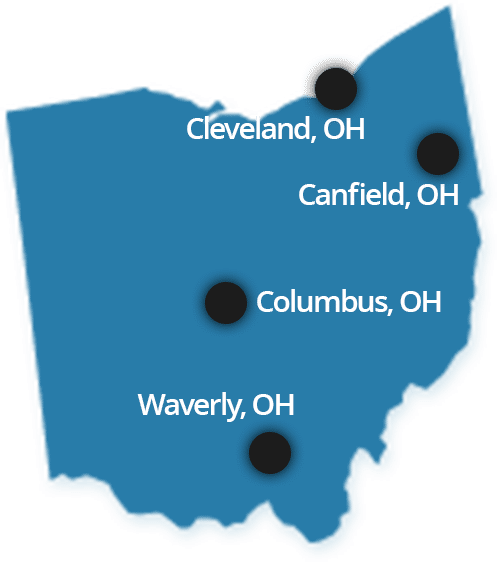
Call us at 1-855-4-PLEVIN for a free consultation on your workers’ compensation claim. Our Cleveland, Columbus, Waverly, and Canfield offices serve injured workers across Ohio, so we can support you wherever you are. We can do a claim review, explain your options after a work-related injury, and fight for your right to the benefits you’ve earned.
Related:
Silicosis from Quartz: A Hidden Threat in the Stone Fabrication Industry
What Happens at a Workers’ Compensation Hearing?
Why Settling a Permanent Disability Case Doesn’t Make Sense
Do You Have to Report a Work Injury Right Away?
How Are Ohio TTD Benefits Calculated?